

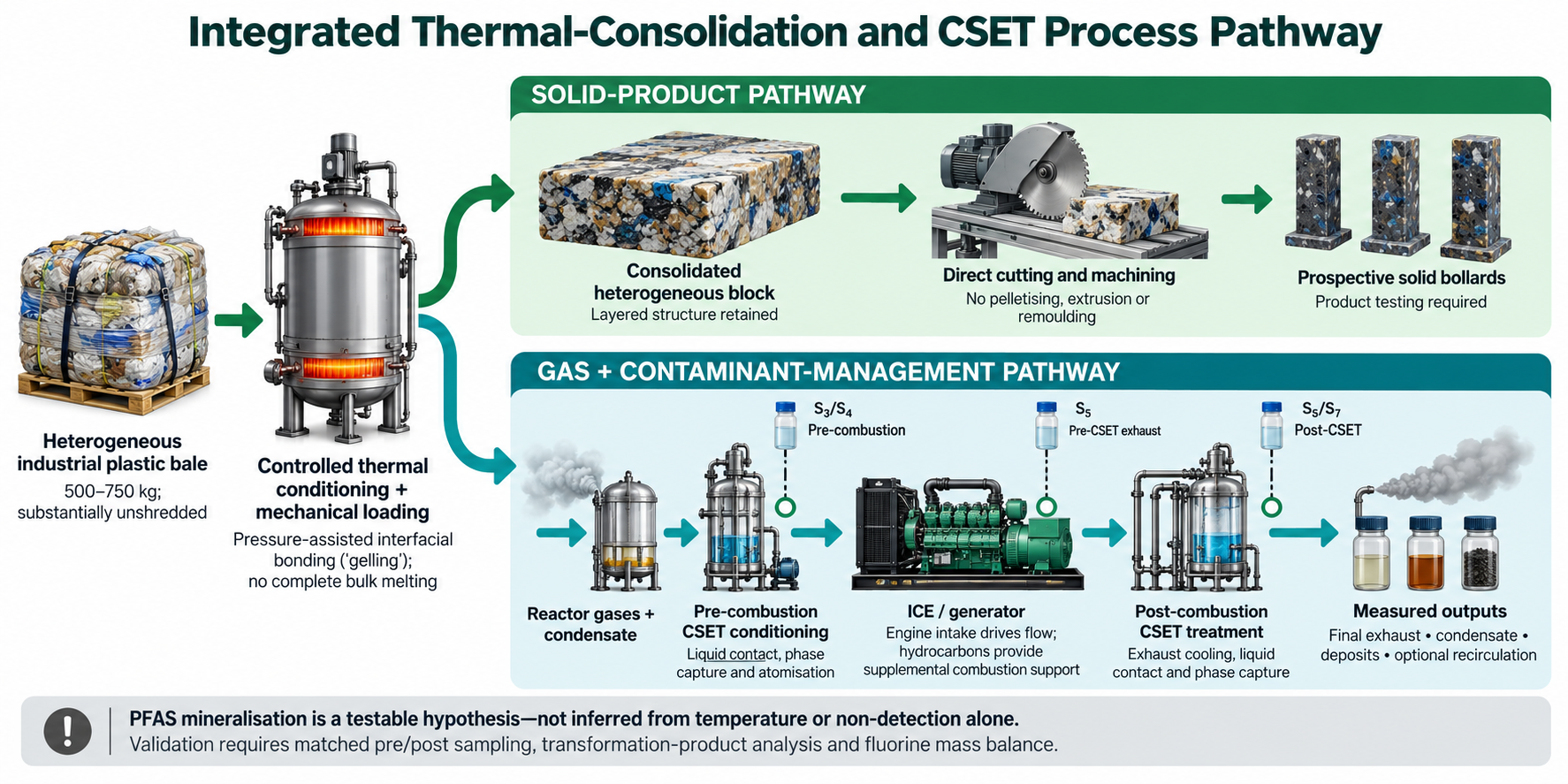
Figure 1. Integrated pathway for processing heterogeneous industrial plastic waste. Controlled thermal conditioning and mechanical loading produce a consolidated, macroscopically heterogeneous block for direct cutting and machining, while released gases and condensate are directed through pre-combustion CSET conditioning, the internal-combustion engine/generator and post-combustion CSET treatment. Sampling boundaries support separate accounting of solid, liquid and gaseous phases. PFAS mineralisation remains a testable hypothesis requiring matched pre- and post-treatment sampling, transformation-product analysis and fluorine mass balance.
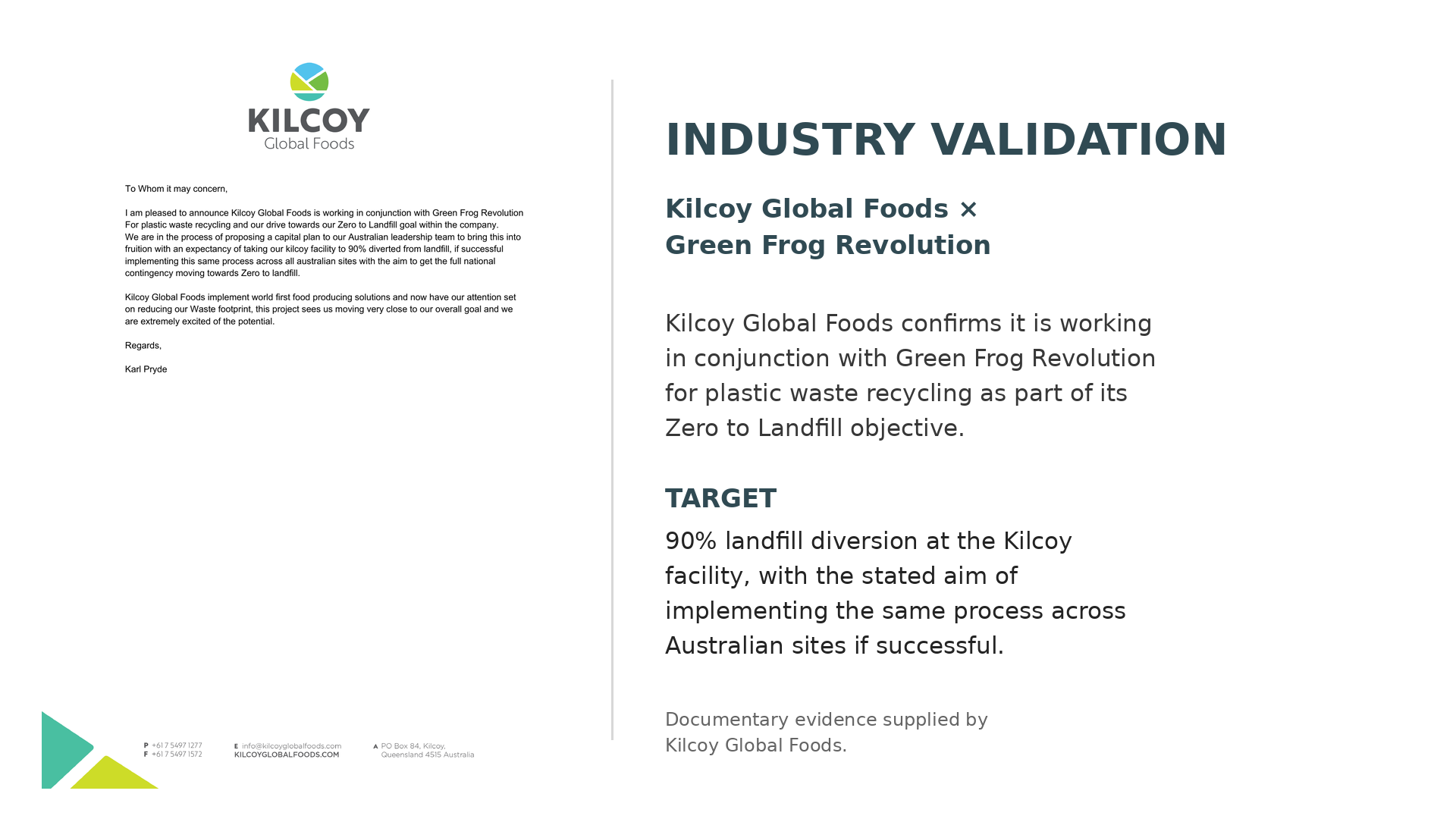
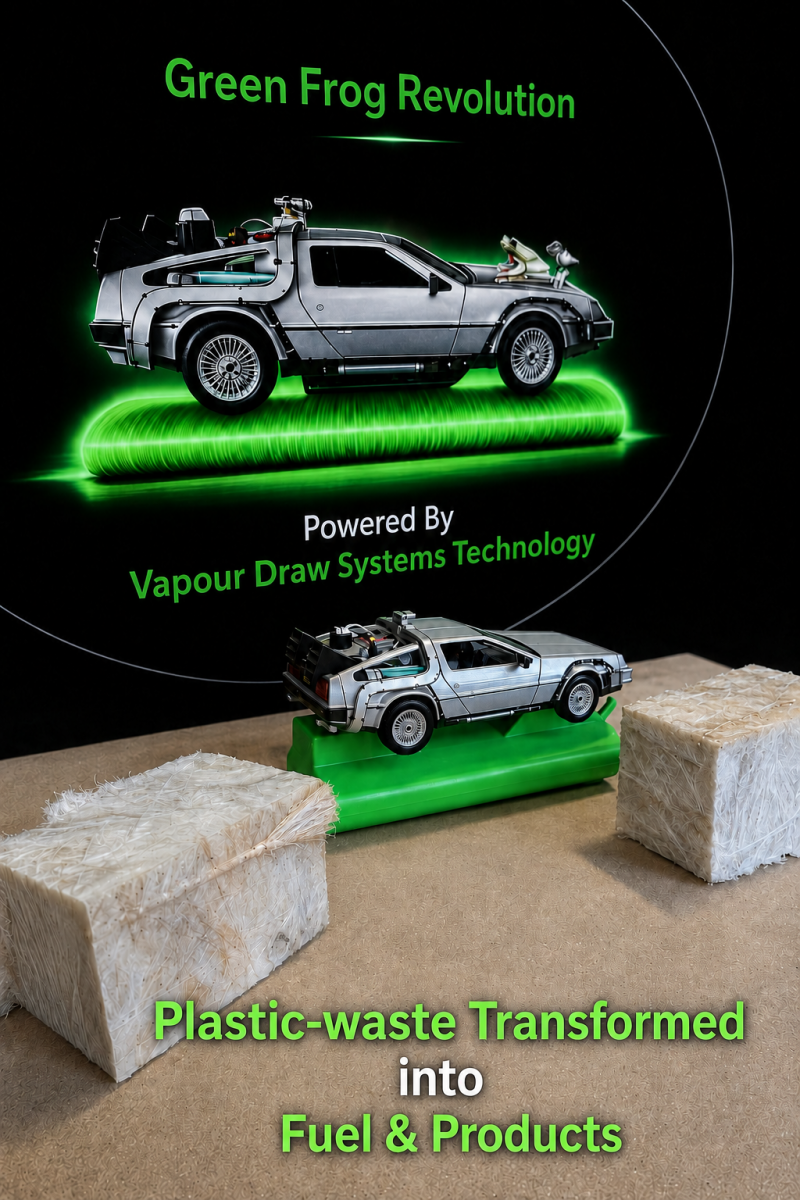
- GFR combines material recovery, process-gas utilisation and contaminant treatment. Hydrocarbons within the extracted process-gas stream provide supplemental fuel to the host combustion source.
- The CSET ( Combustion Support & Exhaust Treatment) system prepares and circulates the PFAS-containing gaseous-vapour mixture through the combustion environment to support PFAS mineralisation, while consolidated plastic is retained for manufacture into useful products. PFAS mineralisation performance remains subject to further controlled testing and independent validation.
Development
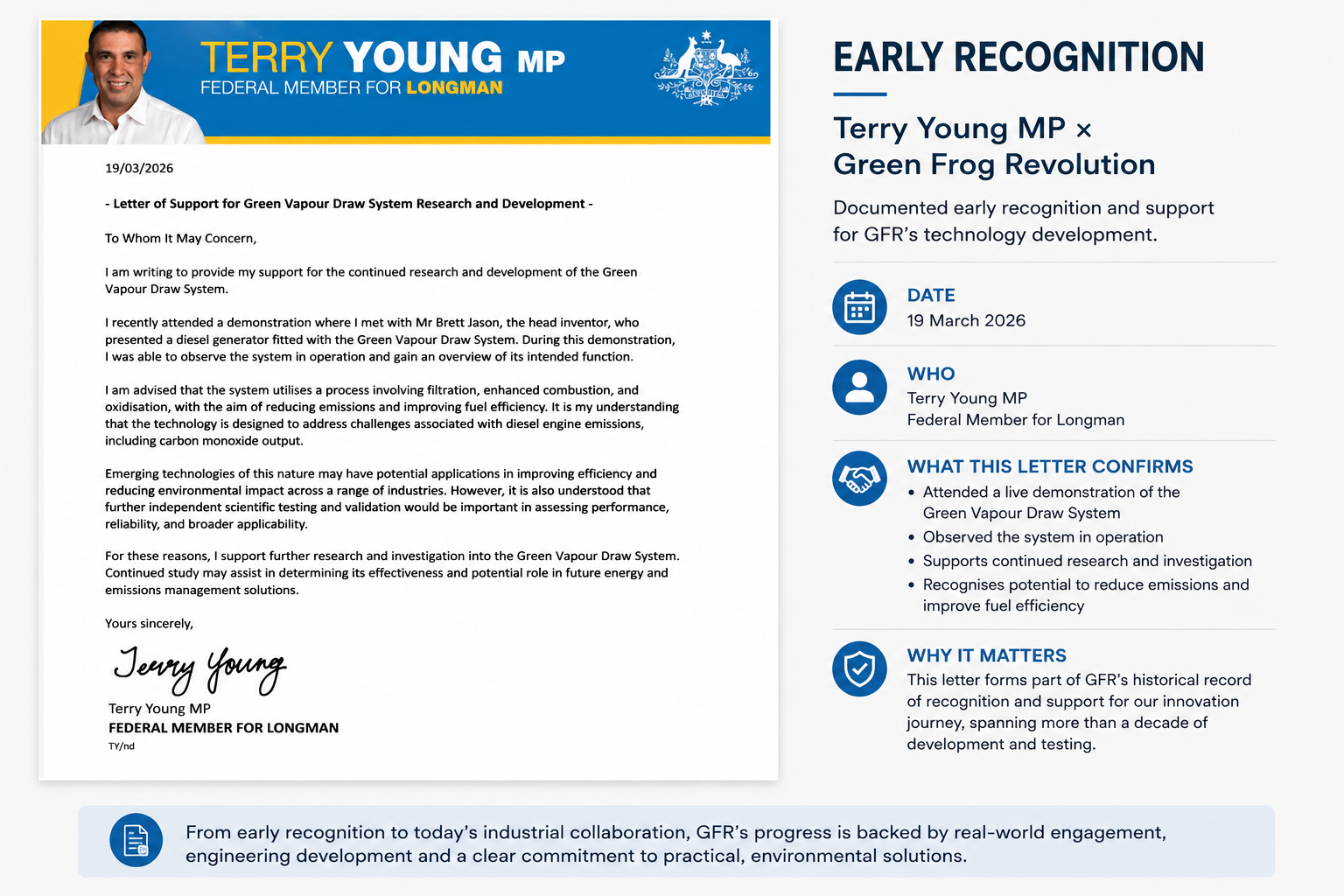
GFR has progressed from early technology development and demonstration to practical engineering, testing and industrial collaboration.
The letter above records Terry Young MP’s attendance at a working demonstration and his support for continued research and independent scientific testing.
Today, GFR continues that evidence-based development approach — build it, operate it, measure it and follow the evidence.
Contact GFR
Our headquarters
Caboolture, Queensland Australia
info@greenfrogrevolution.com.au
For industrial waste-processing, technology and service partnership enquiries, contact GFR.